
Sectors We Serve
Industrial &
Manufacturing
Robust Capital Solutions for Asset-Heavy Operations
Manufacturing and industrial businesses often require complex financing structures to support machinery, land, factories, inventory and long production cycles.
RCA provides structured finance solutions for asset-heavy businesses by aligning the facility with production cycles, asset values, operational cash flows and future expansion plans.

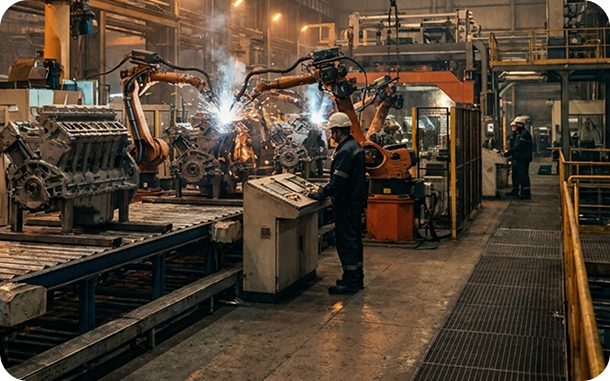
Heavy Manufacturing & Factories
Factories and industrial assets often face valuation challenges because machinery may be specialised, ageing or location-dependent.
RCA structures machinery loans, machinery financing, business equipment loans, business loans for machinery purchase, factory-backed funding, expansion loans and working capital facilities.
Institutional comfort is strengthened by presenting realistic machinery valuations, stable operational history, clear ownership, insurance coverage and repayment aligned with expected production capacity.
We secure heavy manufacturing capital by:
01
Presenting strong machinery valuations and proving stable, long-term operations
02
Ensuring adequate insurance coverage and establishing exceptionally clear ownership
03
Structuring funding in distinct phases—separating land, machinery, fit-outs, and working capital—to reduce borrower pressure
Textiles
& Production
Textiles & Production
Textile and apparel businesses operate through raw-material procurement, seasonal demand, export cycles and frequent machinery modernisation.
RCA supports textile and production businesses through working capital management, inventory finance, machinery loans, invoice financing, export-linked working capital and factory expansion funding.
The objective is to structure short-term facilities around actual procurement and collection cycles, reducing excessive borrowing and repayment mismatches.

We support textile and production houses by:
01
Structuring short-term facilities that precisely match your inventory and receivable cycles, guaranteeing you do not overpay interest
02
Securing machinery loans for loom upgrades and automated production lines
03
Eliminating red flags that delay working capital approvals
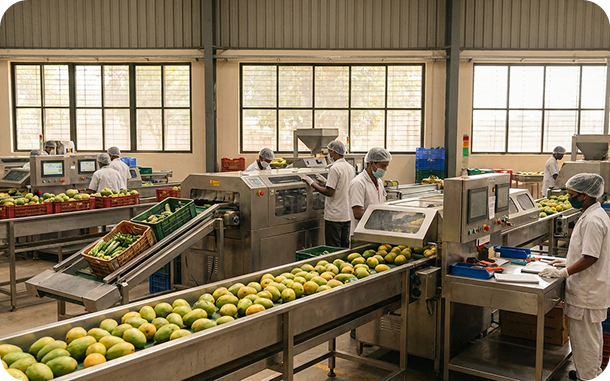
Food Processing & FMCG
Food processing and FMCG businesses require continuous liquidity across raw materials, production, storage, distribution and customer collections.
RCA supports these businesses through working capital loans in India, supply chain finance in India, cold-storage funding, plant expansion, invoice discounting, machinery finance and growth capital in India.
The financing proposal is strengthened through clear inventory movement, receivable visibility, GST and banking trends, DSCR, current ratios, operating margins and realistic expansion projections.
RCA optimises FMCG cash flows by:
01
Securing working capital to maintain continuous production and distribution networks
02
Arranging expansion capital for new cold-storage facilities and processing plants
03
Focusing on critical ratio corrections, actively improving DSCR, current ratios, and EBITDA margins to secure higher limits

Metals & Mining
Metals and mining businesses operate through commodity cycles, specialised equipment and significant infrastructure investment.
RCA supports eligible businesses with heavy-equipment finance, machinery financing, processing-infrastructure funding, working capital facilities, refinancing, debt consolidation loans and capital stack planning.
The structure focuses on matching long-term assets with appropriately tenured secured funding while carefully managing short-term and unsecured exposure.
We architect capital for metals and mining by:
01
Funding heavy earth-moving equipment and specialised processing infrastructure
02
Consolidating scattered portfolios into manageable, structured secured loans to enhance overall cash flow
03
Designing capital stacks that utilise secured funding for long-term stability while carefully managing unsecured borrowing limits
Frequently Asked Questions
Manufacturing businesses may require machinery loans, machinery financing, business equipment loans, business loans for machinery purchase, factory-backed funding, working capital facilities, expansion loans, or structured finance solutions. The right facility depends on production cycles, asset values, collateral strength, operational cash flows, and expansion plans.
A machinery loan helps businesses fund the purchase, upgrade, or installation of production equipment. Lenders evaluate the machinery cost, expected productivity, borrower cash flow, asset valuation, ownership documents, insurance, and repayment capacity before finalising the loan structure.
Machinery financing may be used for new equipment, replacement machinery, automation, production-line upgrades, factory expansion, or specialised industrial equipment. The repayment structure should ideally be aligned with the expected increase in production capacity or business revenue.
Textile and production businesses can improve working capital by aligning inventory finance, receivable cycles, export-linked funding, invoice financing, and machinery loans with actual procurement and collection timelines. Strong working capital management helps reduce repayment mismatches and unnecessary borrowing costs.
Food processing and FMCG businesses may use working capital loans in India, supply chain finance in India, cold-storage funding, plant expansion finance, invoice discounting, machinery finance, and growth capital in India. Lenders assess inventory movement, receivable visibility, GST records, banking trends, margins, and repayment capacity.
Effective working capital management for manufacturers involves aligning inventory, receivables, supplier payments, production cycles, and short-term borrowing facilities. A well-structured working capital loan should support operations without creating unnecessary interest costs or repayment pressure.
Yes, eligible industrial businesses may consider debt consolidation loans when multiple facilities create repayment pressure, administrative complexity, or inefficient borrowing costs. The consolidation structure should be evaluated against tenure, interest cost, collateral use, foreclosure charges, and long-term cash-flow stability.